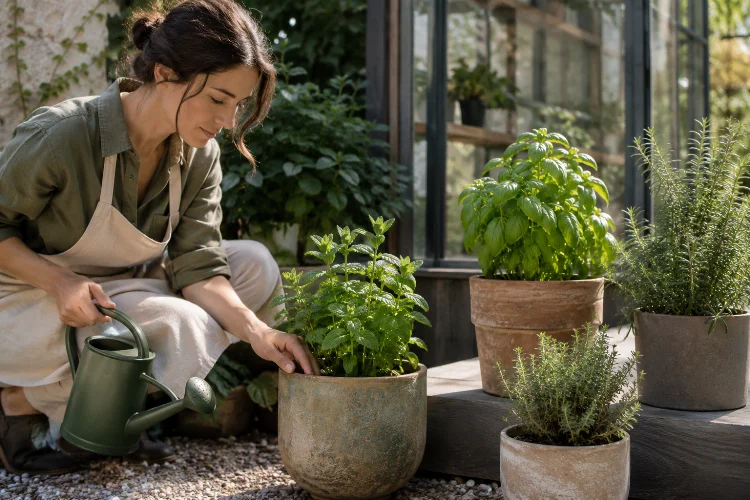
Growing several herbs in the same garden can create one surprising problem: they do not all want the same thing.
You might water basil and rosemary together, only to find that basil still looks thirsty while rosemary begins struggling in overly wet soil. Or you may place mint and thyme in the same sunny corner and notice that one handles the conditions much better than the other.
Understanding how sunlight and water needs differ across common herbs makes home gardening far easier. Most culinary herbs enjoy plenty of light, but their tolerance for heat, shade, dry soil, and moisture can vary significantly.
According to University of Minnesota Extension, most herbs perform best with at least six hours of direct sunlight per day, yet some species tolerate drier conditions much better than others. Good drainage is equally important because constantly wet soil can damage roots.
Once you understand these differences, you can group plants more intelligently and avoid treating every herb exactly the same.
Most Herbs Like Sun, but “Full Sun” Is Not the Whole Story
Most popular culinary herbs prefer bright conditions.
Basil, rosemary, thyme, oregano, sage, and many other herbs generally grow best with around six or more hours of direct sunlight. Strong light often supports compact growth and better aroma, while insufficient light can produce thin, stretched stems.
However, sunlight needs are also influenced by climate.
Six hours of sun in a cool northern garden is not the same as six hours of intense afternoon heat in a tropical or very hot region. Plants in containers can also heat up and dry much faster than plants growing directly in the ground.
For that reason, gardeners should observe the plant rather than relying only on a number.
Pale, scorched leaves may suggest excessive heat or sudden exposure, while weak, leaning, leggy growth often indicates insufficient light.
Basil Likes Bright Light and Consistent Moisture
Basil is a sun-loving herb, but it is not especially drought tolerant.
University of Minnesota Extension recommends at least six to eight hours of bright light each day for basil, along with well-drained soil.
Unlike many Mediterranean herbs, basil usually performs better when its root zone does not remain dry for long periods.
If the soil becomes excessively dry, basil leaves can wilt quickly. Repeated drought stress may reduce growth and make the plant less productive.
That does not mean the soil should stay constantly soaked.
A practical approach is to water deeply, then allow the upper surface of the soil to begin drying before watering again. Containers may need more frequent attention because potting mix loses moisure faster than garden beds.
Basil therefore teaches an important gardening principle: moist and waterlogged are not the same thing.
Rosemary Prefers Sun and Much Drier Conditions
Rosemary behaves very differently.
It is associated with Mediterranean growing conditions and generally prefers strong sunlight, excellent drainage, and soil that dries somewhat between waterings.
Penn State Extension notes that Mediterranean herbs such as rosemary, thyme, oregano, sage, and lavender naturally thrive in sunny, dry, well-drained environments.
This makes overwatering one of the more common problems with rosemary.
A gardener who waters rosemary every time basil looks thirsty may eventually keep the rosemary roots too wet.
For container-grown rosemary, drainage holes are essential. It is usually better to check the soil before watering rather than following a rigid daily schedule.
Rosemary also performs poorly in dim indoor locations. Penn State lists it among herbs that do best with direct sunlight when grown indoors.
Think of rosemary as a plant that prefers bright conditions and relatively dry feet.
Thyme and Oregano Are Comfortable With Less Frequent Watering
Thyme and oregano share several characteristics with rosemary.
Both generally appreciate strong sunlight and freely draining soil. Once established, they can handle somewhat dry conditions better than leafy annual herbs such as basil.
Illinois Extension notes that many perennial herbs tolerate soil drying between waterings after they become established, while annual herbs tend to benefit from more consistent moisture.
This makes thyme and oregano good companions in a container or garden bed.
You can often group them with rosemary because their moisture preferences are relatively similar.
However, young plants still need attention.
A newly transplanted thyme or oregano plant does not have the extensive root system of an established specimen. During the first weeks, water more carefully while allowing excess moisture to drain away.
The key word is balance.
Dry-tolerant does not mean a plant never needs water.
Mint Tolerates More Moisture and Somewhat Less Light
Mint is one of the easiest herbs to grow because it is adaptable and vigorous.
It generally enjoys moist soil more than thyme, rosemary, or oregano. Illinois Extension specifically notes that mint can tolerate somewhat lower light levels and more water than several other common indoor herbs.
That makes mint useful in locations where intense all-day sunlight is unavailable.
It can still grow well in bright conditions, but it is usually less demanding about direct sun than rosemary.
Mint also gives obvious signals when conditions are too dry. Leaves may droop dramatically, especially in small containers during warm weather.
Because mint spreads aggressively, growing it seperately in its own pot is often a practical choice. That also makes it easier to give the plant its prefered moisture level without affecting drought-tolerant herbs nearby.
Parsley Likes Moisture but Still Needs Good Drainage
Parsley sits somewhere between basil and Mediterranean herbs.
Members of the carrot family, including parsley, generally prefer slightly moist soil with good drainage. University of Minnesota Extension contrasts these herbs with many members of the mint family that tolerate drier conditions once established.
Parsley therefore benefits from regular watering, particularly during active leafy growth.
Letting it repeatedly become severely dry can reduce quality and slow production. At the same time, keeping the roots continuously saturated can encourage root problems.
Parsley can also tolerate a little less intense light than rosemary or thyme, although good light still supports healthy growth.
If you are growing parsley in containers, check the soil frequenty during warm weather. Small pots can lose water surprisingly fast.
Chives Are Flexible but Prefer Reliable Moisture
Chives are generally forgiving plants.
They perform well in sunny locations and can tolerate a range of growing conditions, making them useful for beginners. Like many leafy herbs, however, they usually produce better growth when moisture is reasonably consistent.
Illinois Extension recommends timely watering for container herbs and emphasizes the importance of keeping soil moist without creating poor drainage.
Chives can survive brief dry periods, especially once established, but prolonged drought may result in thinner or slower-growing leaves.
They are also relatively adaptable to light.
Full sun encourages strong growth, yet chives can often remain productive with some partial shade.
This flexibility makes them useful when your brightest garden space is already occupied by more demanding plants such as rosemary or basil.
Why Container Herbs Dry Out Differently
Container gardening changes the watering equation.
Herbs planted in pots have access to a much smaller volume of soil than plants growing in the ground. On hot or windy days, water can disappear quickly.
University of Minnesota Extension notes that outdoor container herbs may sometimes require daily watering during hot weather, even though herbs growing in garden soil may need deep watering much less often.
Container size matters too.
A small pot can become dry within hours, while a large container holds moisture much longer. Dark-colored pots exposed to direct sun may also heat up quickly.
Instead of watering every plant on the same schedule, test the soil.
Push a finger gently into the upper layer. If it still feels moist, watering may not yet be necessary. If it feels dry and the plant prefers consistent moisture, it may be time to water.
This simple habit is often more reliable than watering every morning automatically.
Group Herbs by Similar Needs
One of the easiest ways to simplify herb care is to group plants according to their preferences.
Rosemary, thyme, oregano, sage, and lavender generally make logical companions because they favor bright light, excellent drainage, and relatively dry conditions.
Basil and parsley usually appreciate more consistent moisture.
Mint is often best in its own container because it likes moisture and spreads quickly.
Grouping plants this way means you are less likely to overwater drought-tolerant species while trying to satisfy thirstier ones.
It also makes garden maintenance easier.
Instead of remembering an individual schedule for every herb, you can think in simple categories: sun-loving and dry-tolerant, sun-loving and moisture-loving, or somewhat shade-tolerant and moisture-friendly.
Learning how sunlight and water needs differ across common herbs can prevent many of the most common beginner gardening mistakes.
Basil prefers strong light and steady moisture, rosemary and thyme like sunnier and drier conditions, mint handles more moisture, while parsley and chives usually benefit from consistent but well-drained soil.
The most useful lesson is that herbs should not all be watered on the same schedule.
Observe the soil, container size, weather, and condition of each plant before reaching for the watering can. Start grouping herbs with similar needs and adjust their placement as you learn how they respond.
A little observation can turn a struggling collection of pots into a much healthier and easier-to-manage home herb garden.