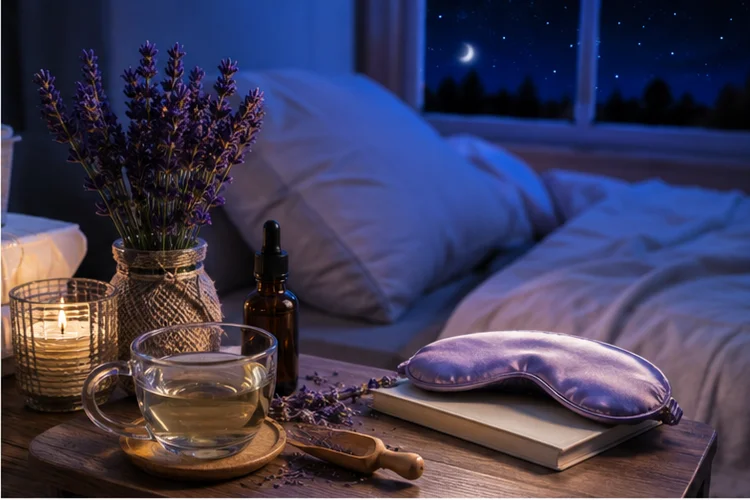
Some nights, sleep feels effortless. On others, your body is tired but your mind seems determined to replay every conversation, unfinished task, and worry from the day.
Long before modern sleep laboratories existed, herbal traditions developed their own approaches to rest and nighttime calm.
Plants such as valerian, chamomile, lavender, lemon balm, and passionflower became associated with evening routines, mild nervous tension, and sleep support.
Understanding how herbal traditions approach rest, calm, and better sleep is interesting because these systems rarely treated sleep as an isolated event.
Evening habits, emotional state, food, environment, daily activity, and plant preparations could all become part of the wider picture.
Modern research provides a more cautious perspective. Some herbal preparations have been studied clinically, but evidence varies considerably between plants and products.
NCCIH notes, for example, that results for valerian in insomnia have been inconsistent, while research on several other popular sleep herbs remains limited.
The useful approach is therefore neither blind belief nor complete dismissal. It is learning where tradition ends and evidence begins.
Traditional Herbalism Often Starts With Calm Before Sleep
Many herbal traditions connect good sleep with what happens before bedtime.
Rather than treating sleep as a switch that can simply be turned on, traditional approaches often include calming evening rituals.
A warm herbal drink, quieter activity, dimmer surroundings, and reduced stimulation may all help signal that the active part of the day is ending.
Interestingly, this overlaps with modern sleep guidance.
CDC recommends maintaining consistent sleep and waking times, keeping the bedroom quiet and relaxing, reducing electronic-device use before bed, avoiding late caffeine and large meals, and exercising regularly.
This does not prove that traditional bedtime rituals work through any specific historical theory. It simply shows that the context surrounding an herb may matter.
A cup of herbal tea consumed while answering stressful emails at midnight is a very different experience from the same cup during a quiet wind-down routine.
The ritual may sometimes be as meaningful as the plant itself.
Valerian Is One of the Best-Known Traditional Sleep Herbs
Valerian root, from Valeriana officinalis, has been associated with sleep and nervous tension for centuries.
The European Medicines Agency recognizes certain valerian preparations for mild nervous tension and sleep disorders.
Importantly, EMA distinguishes between specific ethanolic extracts supported by clinical studies and other valerian preparations whose indications are based primarily on long-standing traditional use.
That distinction matters because “valerian” does not describe one identical product.
A tea made from dried root, a tincture, and a standardized dry extract can have different concentrations and chemical profiles.
NCCIH takes a more cautious overall view, reporting that clinical studies of valerian for insomnia have produced inconsistent results and that its usefulness for insomnia has not been established conclusively.
So valerian is a perfect example of the gap that sometimes exists between traditonal herbal practice and modern evidence.
It has a substantial history of use, but that history should not be translated into a promise that every valerian product will reliably solve insomnia.
Chamomile Is More About Tradition Than Strong Sleep Evidence
Chamomile tea may be the classic image of a relaxing bedtime drink.
Its gentle aroma and long history of use have made it part of evening routines in many households. German chamomile, Matricaria recutita, is also widely used in herbal preparations.
However, modern evidence for insomnia is surprisingly limited.
NCCIH reports that there is very little research on chamomile for insomnia, and a review it cites found one insomnia study that did not show a benefit.
This does not mean a warm cup of chamomile is pointless.
Someone may enjoy the taste, associate it with winding down, or find the ritual relaxing. Those experiences are different from claiming that chamomile has been clinically proven to treat insomnia.
Safety deserves attention too. Chamomile can cause allergic reactions, especially in people sensitive to related plants.
That is a useful reminder that even familiar “gentle herbs” deserve normal caution.
Lemon Balm Has a Traditional Role in Mild Stress and Sleep
Lemon balm, or Melissa officinalis, has a bright lemon-like fragrance despite belonging to the mint family.
European herbal medicine has traditionally used lemon balm leaf for mild symptoms of stress and as a sleep aid.
EMA states that these uses are based on long-standing traditional use rather than sufficient clinical-trial evidence to draw firm conclusions about effectiveness.
This wording is important.
“Traditionally used to aid sleep” is not equivalent to “clinically proven to treat insomnia.”
Lemon balm may appear as an herbal tea, liquid preparation, or ingredient in combinations with other calming herbs. In educational herbalism, it provides a useful example of how aromatic plants can occupy both culinary and traditional medicinal roles.
Its smell also makes it particularly well suited to evening tea rituals.
But as with other herbs, the preperation, concentration, frequency, and individual user all matter.
Beginners should avoid assuming that combining several calming herbs automatically produces a more effective or safer formula.
Passionflower Shows the Difference Between Plausibility and Proof
Passionflower, particularly Passiflora incarnata, is another plant historically linked with nervousness and sleep.
EMA recognizes passionflower preparations for mild symptoms of mental stress and to aid sleep on the basis of traditional use. Its assessment specifically notes that clinical studies were too small or methodologically limited to support firm conclusions.
Modern evidence is beginning to add more information, but it remains limited.
NCCIH reports that a small amount of research suggests oral passionflower may improve total sleep time in adults with insomnia, while effects on falling asleep and staying asleep have been mixed.
This is a good example of how evidence develops gradually.
A traditional practice may provide a reason to investigate a plant. Early studies may produce interesting results. Larger, better-designed trials are then needed before confidence becomes stronger.
Herbal education becomes much more useful when students learn to recognize that middle ground instead of labeling every herb as either “proven” or “useless.”
Lavender Brings Aroma Into the Sleep Conversation
Lavender approaches nighttime calm differently because aroma is often central to its use.
Dried lavender flowers have long been placed in pillows, baths, and scented preparations, while lavender essential oil is widely used in aromatherapy.
Research has explored whether aromatherapy might improve sleep.
NCCIH reports that a 2021 review of 16 studies involving 1,346 participants suggested aromatherapy may improve sleep quality and insomnia symptoms, but larger and more rigorous studies are still needed.
For lavender specifically, NCCIH says it remains unclear whether lavender-oil aromatherapy reliably improves sleep quality or insomnia.
That difference is easy to miss.
Evidence suggesting potential benefits from aromatherapy as a broad category does not automatically prove that lavender alone is an effective insomnia treatment.
Essential oils also require different safety considerations from herbal teas. They are highly concentrated preparations and should not be treated like ordinary infused herbs.
A pleasant scent may support a relaxing environment, but stronger aroma does not necessarily produce better sleep.
Herbal Sleep Traditions Usually Work Best as Part of a Routine
One of the most practical lessons from traditional herbal approaches is that sleep rarely depends on a single ingredient.
A calming herb may become part of a wider evening pattern: eating earlier, lowering stimulation, bathing, reading, dimming lights, or drinking a warm beverage.
Modern recommendations support many of these behavioral ideas.
CDC advises going to bed and getting up at consistent times, creating a quiet and cool sleep environment, limiting electronics before bed, avoiding caffeine later in the day, and avoiding alcohol and large meals close to bedtime.
Alcohol deserves particular attention because it can make people feel sleepy initially while contributing to sleep disruption later in the night.
This means a complicated herbal formula cannot necessarily compensate for habits that repeatedly interfere with sleep.
Before adding another supplement, it may be worth examining the evening itself.
Sometimes the most useful “sleep preparation” is less caffeine, fewer notifications, and a more predictable bedtime.
Natural Sleep Products Still Need Safety Caution
Herbs associated with calm can affect alertness, and some may interact with medicines or other substances.
Valerian medicines, for example, may influence the ability to drive or operate machinery according to EMA guidance. Passionflower and other sedating products also deserve caution when combined with substances that cause drowsiness.
The idea that “natural sleep aid” automatically means harmless is therefore misleading.
Kava provides a more serious example. Although it has been marketed for anxiety and sleep, NCCIH notes concerns about severe liver damage associated with kava products.
Pregnancy, breastfeeding, medication use, chronic illness, and preparation for surgery can all change the risk picture.
Always check the specific botanical product rather than assuming that every relaxing herb belongs to one safe category.
If you are already using prescription sleep medicines, anxiety medicines, antidepressants, or other sedating drugs, professional advice is particularly important before adding herbal products.
Persistent Insomnia Needs More Than Herbal Experimentation
There is an important difference between occasionally struggling to unwind and experiencing a persistent sleep disorder.
Chronic insomnia can involve repeated difficulty falling asleep, staying asleep, or achieving restorative sleep. It may be linked with stress, mental health conditions, medical conditions, medications, breathing disorders, or other factors.
NCCIH notes that clinical guidelines do not support valerian as a treatment for chronic insomnia and that evidence for many complementary sleep products remains uncertain.
If poor sleep continues for weeks, significantly affects daytime functioning, or occurs alongside symptoms such as severe snoring, breathing interruptions, major mood changes, or extreme daytime sleepiness, medical evaluation can help identify the underlying cause.
Herbal traditions can be fascinating tools for studying cultural approaches to rest.
They should not become a way to repeatedly cover up an unexplained health problem.
Remeber that better sleep is not simply about becoming unconscious faster. Healthy sleep also depends on duration, continuity, timing, and how rested you feel the next day.
Herbal traditions have long connected plants such as valerian, chamomile, lemon balm, passionflower, and lavender with rest, calm, and nighttime routines.
Some preparations have limited or specific clinical support, while many traditional uses remain backed mainly by historical experience rather than strong modern trials.
The most sensible approach is to view herbs as one possible part of a broader sleep routine. Consistent bedtimes, lower evening stimulation, less late caffeine, and a comfortable bedroom remain important foundations.
If you are exploring herbal sleep traditions, choose one plant and investigate its traditional use, modern evidence, preparation, and safety before trying complicated mixtures.
Building that habit of careful learning is far more useful than chasing the latest “natural sleep cure.”