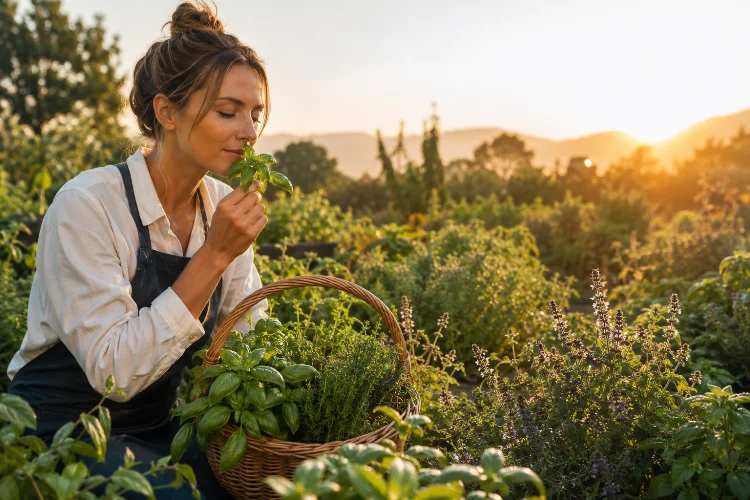
A handful of basil picked at the right moment can smell intensely sweet and peppery. The same plant harvested later-especially after it has been flowering for a while-may taste noticeably different.
That is not simply imagination. The stage of plant growth, weather conditions, moisture, and even the time of day can influence the qualities we notice after harvesting.
Understanding how harvest timing influences herbal quality and aroma is therefore an important skill for gardeners, cooks, and students of herbalism.
Plants continuously change as they grow. Leaves develop, flowers open, seeds mature, roots store resources, and concentrations of aromatic compounds can shift along the way.
NC State Extension recommends harvesting herbs when the oils responsible for their flavor and aroma are near their peak, while emphasizing that the ideal moment depends on both the plant part being collected and its intended use.
There is no single perfect harvesting rule for every herb. But once you understand a few basic patterns, deciding when to reach for the scissors becomes much easier.
Why Harvest Timing Matters for Herbs
A living herb is constantly allocating resources between leaves, stems, flowers, seeds, and roots.
A young basil plant, for example, spends considerable energy developing leafy growth. As flowering begins, more resources shift toward reproduction. That change can influence the characteristics gardeners care about, including leaf tenderness, flavor, and aroma.
For aromatic herbs, volatile oils are particularly important because they contribute strongly to fragrance and taste. NC State recommends timing herb harvests around the period when these oils are at their peak rather than simply collecting material whenever convenient.
This is why a technically mature plant is not necessarily at the best stage for every purpose.
Someone collecting basil leaves wants a different developmental stage from someone saving basil seed. Likewise, a gardener collecting chamomile flowers is watching for different visual clues than someone harvesting a medicinal root.
The first question should therefore be: Which part of the plant am I trying to use?
Morning Is Often an Excellent Time to Harvest
For many leafy and aromatic herbs, morning provides a useful harvesting window.
Penn State Extension recommends collecting herbs on a sunny day in mid-morning after the dew has evaporated, noting that herbs generally contain more of their essential oils under these conditions.
NC State similarly recommends harvesting early in the morning after dew has dried but before the heat of the day becomes strong.
There is also a practical reason to avoid picking wet foliage.
Plant material collected while covered in rain or heavy dew carries additional surface moisture. That moisture can complicate drying and storage, particularly when you intend to preserve the herbs rather than use them immediately.
You do not need to stand outside with a stopwatch, however. Think of morning harvesting as a useful general guideline rather than a magical five-minute window.
Wait until foliage is reasonably dry, then collect before intense daytime heat whenever practical.
Harvest Leafy Herbs Before Heavy Flowering
If leaves are the part you want, flowering is one of the most useful signals to watch.
NC State advises harvesting herbs grown primarily for their foliage before flowering. Once flowering advances, leaf production can decline and the characteristics of the foliage may change.
Basil is an excellent example. Penn State recommends harvesting its leaves and stems throughout the growing season before the flowers bloom, preferably during the morning.
Thyme follows a similar pattern. Its leafy branches can be collected just before flowering, ideally on a dry morning after dew has disappeared and before midday.
Oregano can also be collected before full flowering. Penn State recommends harvesting oregano during summer or early autumn before the plant reaches full bloom.
This does not mean an herb becomes useless the second one flower appears. It simply means that the pre-flowering stage is often an especially useful target when your priority is high-quality aromatic foliage.
Flowers Have Their Own Best Harvest Stage
When the flower itself is the desired herbal material, the timing changes.
NC State recommends collecting flowers such as chamomile and borage shortly before they reach full flower. The same guidance notes that flower buds can have particularly intense oil concentration and flavor before fully opening.
This makes visual observation more important than calendar dates.
Weather and growing conditions can make the same species flower earlier or later from one year to another. Instead of deciding that “June 10 is harvest day,” watch the actual development of the plant.
Buds that are forming, beginning to open, or approaching full bloom provide more useful information.
The precise ideal stage can still vary between species and intended uses. A flower collected for culinary use, aromatic drying, seed production, or ornamental crafts may need to be picked at different stages.
Good herbal harvesting is therefore more about observing plant development than blindly following a fixed schedule.
Seed Herbs Need More Patience
If you want seeds rather than leaves, resist the urge to harvest too early.
Plants such as dill, coriander, and fennel need time for their flowers to mature into seed structures.
NC State recommends harvesting seed-producing herbs when seed pods change from green toward brown or gray but before they become so dry that they split open and scatter their seeds.
Dill provides a clear example. Penn State recommends harvesting dill seeds as they become brown and ripe, then cutting the flower heads and placing them in a paper bag to finish drying.
This creates a fairly narrow practical window.
Harvest too early and the seeds may not be fully developed. Wait too long and much of your crop may already be on the ground.
One simple strategy is to inspect seed heads frequently once their color begins changing. A paper bag placed beneath the harvested heads also helps catch seeds that loosen during drying.
The important point is that seed quality depends on maturity, so the ideal harvset moment is naturally later than it is for tender leaves.
Roots Are Usually Harvested at a Different Stage
Leaf harvesting often happens during active growth, but herbal roots follow another seasonal pattern.
NC State recommends harvesting roots of plants such as chicory and certain traditionally used medicinal herbs in fall after the foliage begins fading.
The underlying idea is that perennial plants change how resources are distributed during their seasonal growth cycle. As above-ground growth declines, roots and underground structures become increasingly important for survival and future regrowth.
However, root harvesting can be much more destructive than collecting leaves.
Cutting a few basil shoots normally leaves the plant alive and growing. Digging up an entire root system may kill the plant completely.
Some perennial medicinal plants also require several years before their roots reach harvestable maturity; NC State, for instance, notes that black cohosh roots may require several years of growth before harvesting.
For beginners, this means root harvesting deserves more planning than simply pulling up a plant at the end of summer.
Correct plant identification, maturity, sustainability, and intended use all matter.
Weather Can Change the Quality of a Harvest
Growth stage is only one part of the equation.
Recent rain, humidity, intense sunlight, drought stress, and temperature can all affect what is happening in a plant and how easily the harvested material can be processed afterward.
For herbs that will be dried, collecting foliage when it is already dry is especially practical. Penn State’s drying guidance recommends a sunny-day harvest after dew has evaporated.
Avoid harvesting immediately after heavy rainfall when you can reasonably wait.
This does not mean herbs picked after rain have suddenly lost all their value. Rather, extra moisture creates additional drying challenges, and damp plant material should not simply be packed tightly into containers.
Pay attention to the condition of the plant as well.
Choose healthy, clean leaves rather than foliage that is heavily damaged, diseased, or covered with insects. Harvesting at the “perfect” hour cannot compensate for poor-quality plant material.
Quality begins with a healthy plant and sensible growing practices.
Harvesting Regularly Can Influence Future Growth
Harvest timing is not only about the material you collect today. It can influence what the plant produces next.
University of Minnesota Extension recommends harvesting herbs throughout the growing season by clipping leaves and stems as needed. Regular harvesting can be particularly useful for leafy culinary herbs that respond by producing additional branches and new growth.
But aggressive cutting has limits.
NC State advises waiting until a plant has enough foliage to continue growing and notes that up to about three-quarters of the current season’s growth may be harvested at one time under its general guidelines.
For beginners, a more conservative aproach is often easier.
Take what you need while leaving enough healthy foliage for continued photosynthesis and regrowth. Young, newly established, stressed, or unhealthy plants should generally be harvested more lightly.
Perennials also need time to prepare for seasonal changes. In climates with freezing winters, late heavy cutting can stimulate tender new growth at an inconvenient time, so local climate should always influence harvesting schedules.
Harvesting Is Only Half of Herbal Quality
Perfect timing means little if freshly harvested herbs are handled badly afterward.
Aromatic compounds can be affected by heat, air, light, moisture, and storage conditions. If you intend to use fresh herbs, process or refrigerate them appropriately instead of leaving cut stems in hot direct sunlight.
If you are drying them, begin the preservaton process soon after harvesting.
University of Minnesota Extension notes that herbs can be preserved through methods including air drying, dehydrating, microwave drying, and freezing, with the appropriate technique depending on the particular herb and intended use.
Drying should remove enough moisture to discourage spoilage while preserving as much desirable color, flavor, and fragance as practical.
Once fully dry, herbs generally benefit from protection against moisture, excessive heat, and strong light.
Think of harvesting and post-harvest handling as one continuous process. The quality you protect in the garden can easily be lost through careless drying or storage.
Learn the Plant Instead of Memorizing One Rule
Perhaps the most useful harvesting lesson is that there is no universal “best time” for every herb.
Basil grown for leaves, chamomile grown for flowers, dill grown for seeds, and a perennial grown for roots each require different observations. Even among leafy herbs, the ideal stage can vary according to species, climate, and intended use.
So learn each plant individually.
Record when it begins flowering. Crush or smell a harvested leaf at different growth stages. Notice how quickly new stems appear after cutting. Compare aroma from an early-morning harvest with material collected during hot afternoon conditions.
A small garden journal can turn these observations into useful experience.
Over several growing seasons, you will begin recognizing the moment when each herb looks, smells, and feels ready to harvest.
Harvest timing can make a noticeable difference to the aroma, flavor, maturity, and overall quality of herbs.
Leafy herbs are commonly harvested before heavy flowering, flowers are often collected close to opening, seeds need time to mature, and roots may follow a completely different seasonal schedule.
Morning harvesting after dew has dried is also a useful general guideline for many aromatic plants. The key is to observe the plant rather than relying entirely on dates.
Next time you grow basil, thyme, oregano, chamomile, or dill, watch how its aroma and structure change through the season.
Harvest small samples at different stages and compare them. That simple experiment will teach you more about herbal quality than memorizing a single universal harvesting rule.